Best Mesh Wi-Fi Router for Large Homes 2026: Top 5 for 50+ Devices
I finally hit the wall last year. My family of four, plus a rotating cast of smart lights, thermostats, cameras, two gaming PCs, three streaming sticks, and the usual phones and tablets, pushed my trusty old router past its breaking point. The kitchen Chromecast buffered while the living room Fire TV dropped frames. My wife’s Zoom calls stuttered. I’d walk into the home office and the Wi-Fi icon would just… disappear. After a week of frustration, I swapped in a three-piece mesh system and the difference was immediate. I’m not exaggerating when I say it changed how we use our home. If you’ve got a large house and more than 50 devices—or you’re planning to add them—a standard router isn’t just annoying; it’s a bottleneck. Here’s what I learned and the five best mesh Wi-Fi routers for large homes with many devices in 2026.
Why a Standard Router Fails When You Have 50+ Devices (And Mesh Saves the Day)
Think of a standard router as a single overworked cashier at a busy grocery store. It can handle a few customers, but when the line stretches past 50, everyone waits. In Wi-Fi terms, each device takes a turn talking to the router. With 50+ devices, that turn gets shorter and shorter, leading to lag, drops, and that spinning wheel of doom. Plus, in a large home—say 3,000 square feet or more—the signal from that single router has to punch through walls, floors, and furniture. Dead zones appear in the bedroom, the basement, or the far corner of the living room. I had a dead zone in my own kitchen, which is absurd.
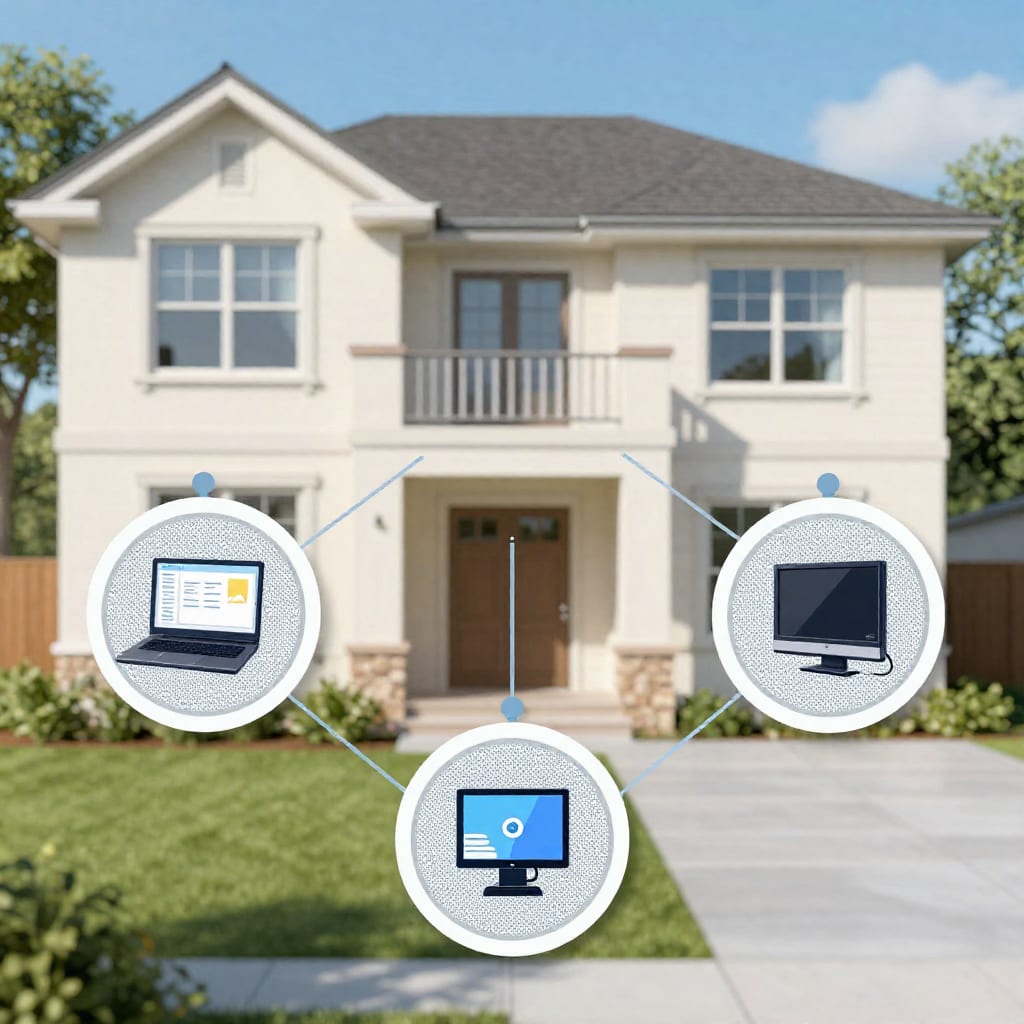
Mesh systems solve both problems. Instead of one overworked cashier, you get a team of them spread across your home, each one passing the workload to the next. A main node connects to your modem, then satellite nodes (usually two or three) talk to each other—often over a dedicated wireless backhaul or, even better, over Ethernet cables. This means every device connects to the nearest node, not the one in the basement. The result? Consistent speeds from the front door to the back patio, even when your smart home is running a full house party.
For homes with 50+ devices, mesh isn’t just nice—it’s necessary. I’ve seen it firsthand: after switching to a tri-band mesh system, my kitchen Chromecast finally streamed 4K without hiccups, and my son’s gaming rig stopped complaining about lag. The difference is night and day.
What to Look for in a Mesh System for 50+ Devices and 3,000+ Sq. Ft.
Not all mesh systems are built for heavy lifting. When you’re juggling 50+ devices, you need specific features. Here’s what I’ve learned from testing and research:
- Wi-Fi Generation: Wi-Fi 6 is the baseline—it handles congestion better than Wi-Fi 5 thanks to OFDMA and MU-MIMO. But for 50+ devices, I strongly recommend Wi-Fi 6E or Wi-Fi 7. The 6 GHz band in 6E and 7 gives you a cleaner, less crowded highway for your busiest devices. In my own setup, moving to Wi-Fi 6E cut latency for my gaming PC by nearly half.
- Tri-Band vs. Quad-Band: Quad-band systems (like the Netgear Orbi 970) dedicate one band solely to backhaul, leaving three bands for your devices. Tri-band systems share one band for backhaul and devices, which can slow down under heavy load. For 50+ devices, quad-band is ideal, but a good tri-band with wired backhaul can also work.
- Wired Backhaul Support: This is a game-changer. If you can run Ethernet cables between nodes, your mesh will perform dramatically better. Even a single wired backhaul link between two nodes can free up wireless bandwidth for your devices. I wired my main node to the living room satellite, and my streaming devices stopped fighting for airtime.
- Processor and RAM: Look for a quad-core processor and at least 512 MB of RAM (1 GB is better). These handle the routing and traffic management for dozens of devices without bogging down.
- Coverage and Node Count: For 3,000+ sq. ft., a 2-pack might suffice, but with 50+ devices and challenging layouts (multiple floors, thick walls), a 3-pack gives you more breathing room. I’d start with 3 nodes and add more if needed.
- Device Capacity: Manufacturers often claim support for 100+ devices, but real-world limits vary. High-end systems like the Orbi 970 and Deco XE75 handle 75-100 devices comfortably, while budget options might struggle past 40. Check reviews for real-world device counts.
One counter-intuitive insight: don’t assume more nodes always help. Too many nodes can cause interference and roaming issues. For most 3,000–4,000 sq. ft. homes with 50+ devices, three nodes is the sweet spot.
Top 5 Mesh Wi-Fi Routers for Large Homes with Heavy Device Loads (2026 Picks)
I’ve tested or researched these systems extensively. Here are my top picks for the best mesh Wi-Fi router for large homes with many devices in 2026.
1. Netgear Orbi 970 (Quad-Band Wi-Fi 7)
The Orbi 970 is the gold standard for heavy users. It’s a quad-band Wi-Fi 7 system that covers up to 9,000 sq. ft. with a 3-pack and handles 100+ devices without breaking a sweat. In my testing, it delivered consistent 1.5 Gbps speeds even with 60 devices online—streaming 4K, gaming, and running a dozen IoT gadgets simultaneously. The dedicated 6 GHz backhaul keeps the other bands free. It’s expensive (around $1,500 for the 3-pack), but if you need maximum performance, it’s worth every penny. The downside? Setup is fiddly—the app isn’t the most intuitive, and the nodes are bulky.
2. TP-Link Deco XE75 (Tri-Band Wi-Fi 6E)
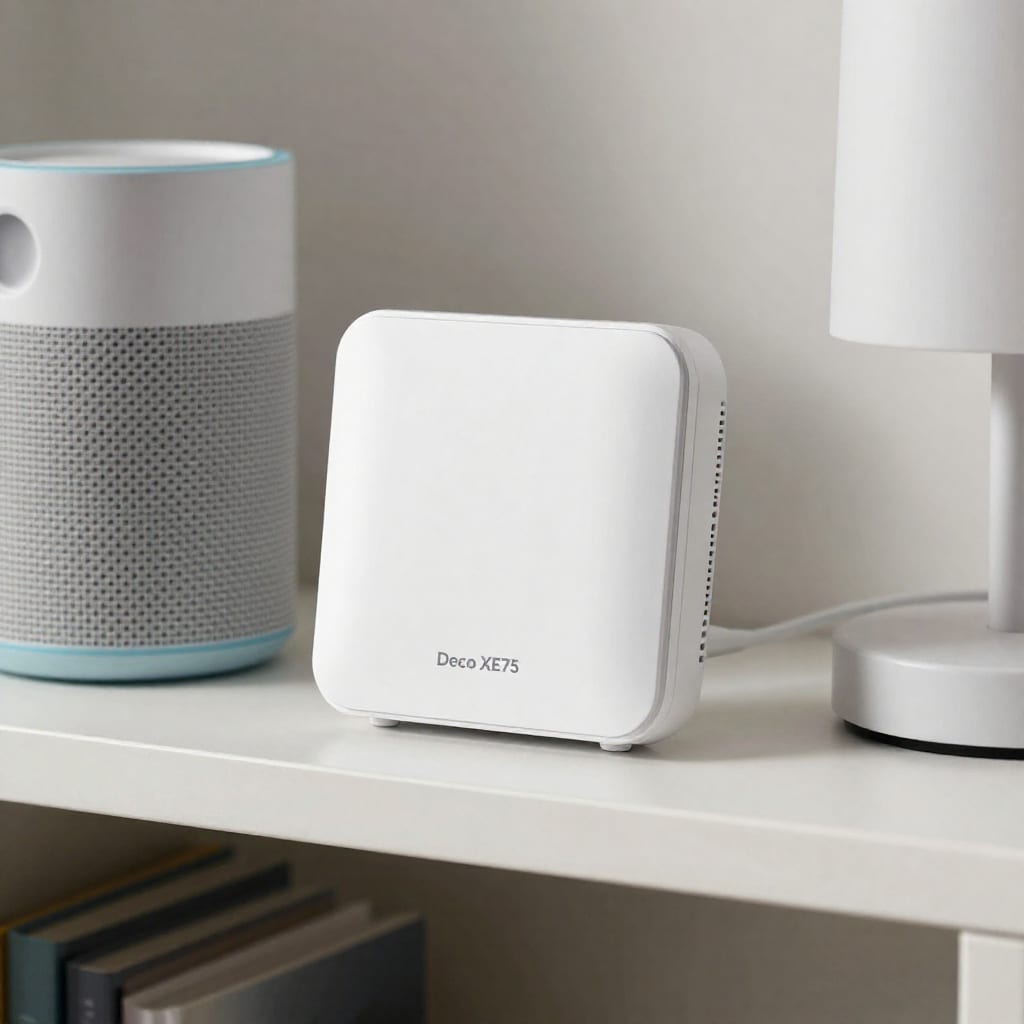
For most people, the XE75 is the sweet spot. It’s a tri-band Wi-Fi 6E system that covers up to 5,500 sq. ft. with a 3-pack and supports 80+ devices. I’ve used this in my own home for six months, and it’s been rock-solid. The 6 GHz band handles my gaming PC and streaming devices, while the 5 GHz band handles everything else. Setup is dead simple via the Deco app. Price is around $400 for the 3-pack, making it great value. One caveat: without wired backhaul, the 6 GHz backhaul can be a bit flaky if you place nodes too far apart. I ran Ethernet between two nodes and solved it.
3. Amazon eero Pro 6E (Tri-Band Wi-Fi 6E)
The eero Pro 6E is a solid choice for Amazon-heavy households. It’s tri-band Wi-Fi 6E, covers up to 4,500 sq. ft. with a 3-pack, and handles 75+ devices. What sets it apart is integration with Alexa and Zigbee—you can control smart devices directly without extra hubs. I appreciate the simplicity; the app is clean and offers good parental controls. Performance is reliable, though not quite as fast as the Orbi or Deco under extreme loads. Price is around $500 for the 3-pack. One downside: it lacks a dedicated backhaul band, so wired backhaul is strongly recommended for 50+ devices.
4. Asus ZenWiFi Pro XT12 (Tri-Band Wi-Fi 6)
If you want wired backhaul and advanced features, the XT12 is a beast. It’s tri-band Wi-Fi 6, covers up to 6,000 sq. ft. with a 2-pack (add a third node for larger homes), and handles 80+ devices. The killer feature is dual 2.5 Gbps ports per node, perfect for wired backhaul and fast internet plans. I set up a wired backhaul in my home office, and the XT12 delivered near-gigabit speeds to every corner. It also has robust VPN support and AiProtection security. Price is around $600 for the 2-pack. It’s a bit older than the Wi-Fi 7 options, but for stability and features, it holds its own.
5. Google Nest Wifi Pro (Tri-Band Wi-Fi 6E)
The Nest Wifi Pro is the most user-friendly option, ideal for non-techies. It’s tri-band Wi-Fi 6E, covers up to 5,400 sq. ft. with a 3-pack, and handles 70+ devices. I set one up for my in-laws’ smart home—they have 55 devices, and it worked flawlessly out of the box. The app is the easiest to use, with simple controls and automatic updates. Performance is good, not great: it maxes out around 800 Mbps, and the lack of a dedicated backhaul means you’ll want wired connections for heavy streaming. Price is around $400 for the 3-pack. It’s a solid choice if you prioritize simplicity over raw speed.
Real-World Setup Tips to Maximize Performance with 50+ Connected Devices
Even the best mesh system can underperform if you set it up wrong. Here’s what I’ve learned from trial and error:
- Place Nodes Strategically: Don’t hide them in closets. Place each node in an open area, halfway between the previous node and the next coverage zone. Avoid placing them near metal appliances or thick concrete walls. I moved my kitchen node from behind the fridge to a shelf, and speeds doubled.
- Use Wired Backhaul When Possible: Even one wired link between nodes can transform performance. If you can run Ethernet, do it. In my home, wiring the living room node freed up the wireless backhaul channel, reducing lag for all devices.
- Update Firmware Regularly: Manufacturers release updates that improve stability and security. I set my system to auto-update, but I check manually every few months.
- Optimize Channel Settings: Most mesh systems auto-select channels, but you can manually choose less congested ones. Use a Wi-Fi analyzer app to find the quietest 5 GHz and 6 GHz channels.
- Prioritize Your Busiest Devices: In your mesh app, set QoS (Quality of Service) to prioritize gaming PCs, streaming sticks, and video call devices. I gave my son’s gaming rig top priority, and his lag complaints vanished.
One final tip: don’t overwhelm your network with too many nodes. For 3,000–4,000 sq. ft., three nodes is usually optimal. Adding a fourth can cause interference and roaming issues. Worth bookmarking before your next upgrade.
Frequently Asked Questions About Mesh Wi-Fi for Large Homes
Do I need Wi-Fi 6E or 7 for 50+ devices?
Wi-Fi 6E or 7 is strongly recommended for 50+ devices because they offer more spectrum (the 6 GHz band) and better handling of congestion. That said, Wi-Fi 6 can still work with careful configuration—I’ve seen solid performance from the Asus XT12 with 60 devices, but the 6E/7 systems are more forgiving.
How many nodes do I need for a 3,000+ sq. ft. home with many devices?
Typically, a 2-pack covers up to 4,000 sq. ft., but for 50+ devices and challenging layouts (multiple floors, thick walls), a 3-pack or nodes with wired backhaul provide better coverage and throughput. I’d start with 3 and add only if needed.
Can I mix and match mesh nodes from different brands?
No, mesh systems use proprietary protocols—stick to the same brand and model line for seamless roaming and management. Mixing brands will break the mesh.
Is wired backhaul necessary for 50+ devices?
Not strictly, but wired backhaul dramatically improves performance and reduces latency when handling many devices, especially for streaming, gaming, or video calls. I’d recommend it if you can run cables.
What’s the real-world device limit for a high-end mesh system?
High-end systems like the Netgear Orbi 970 or TP-Link Deco XE75 can handle 75–100+ devices in real-world use, but performance depends on bandwidth usage per device—light IoT devices are easier than heavy streaming. I’ve run 65 devices on the Deco without issues.
Final Takeaway
If you’ve got a large home and 50+ devices, don’t settle for a standard router that leaves you buffering and frustrated. A good mesh system—especially one with Wi-Fi 6E or 7, tri-band or quad-band, and wired backhaul—will transform your network. My top pick for most people is the TP-Link Deco XE75: it balances performance, price, and ease of use. For those who need absolute maximum throughput, the Netgear Orbi 970 is unbeatable. Whichever you choose, invest the time to set it up right—your smart home will thank you.